Karma Yoga: Living Yoga Everyday

What is practicing yoga? Most of us would                                                                                 answer that it is going to a yoga MotherTheresastudio for a workout or stretching class. Though it is true that an Asana and Pranayama practice does strengthen and stretch out the physical body, that is just one very small part of practicing yoga. Practicing yoga is a continuous practice of striving to attain oneness within ourselves in order to achieve oneness with our environment and in turn with the Universe or God. It is a living practice for our everyday lives.

Karma Yoga is the yoga of taking action along with developing the awareness of the consequences of our actions. In other words, it is becoming more and more aware of the interconnectedness of things, living and non-living, and how each of our actions might affect others and ourselves in the layers upon layers of cause and effect. The eight limbs of yoga are guidelines to aid us in developing and practicing Karma Yoga so that we can take action in our lives out of joy, love, kindness, and service. Let us take yoga out of the studio and expand it into our lives by acting, doing, being, and living it everyday.

I slept and dreamt that life was joy. I awoke and saw that life was service. I acted and behold, service was joy.  – Rabindranath Tagore

Posted in Yoga | Tagged , , , , , , , , , | 4 Comments

To Love Is To Be Responsible

Many of us go through our daily lives saying:                                                                               we love this, that, him, or her…butcleaningriver then turn around and not take care of and disrespect those very things and people. What we really meant to say was that we like, desire, lust for, and wish to possess those things and people. The drives of the ego usually end up damaging and hurting others in some way. That is not love.

Love is unconditional and selfless. To love is to be responsible for everything that our intentions, thoughts, and actions do to both animate and inanimate objects. When we love our homes, we keep them clean and maintain them. When we love the planet, we do our best to reduce, reuse, and recycle. When we love our pets, we give them the care, discipline, and the attention they need. When we love another person, we repect their needs and do nothing that might contribute or lead to their suffering. When we love, we have compassion and the wish to do what is best for others.

All the joy the world contains
Has come through wishing happiness for others.
All the misery the world contains
Has come through wanting pleasure for oneself.

-Shantideva 8:129

Posted in Meditations, Religions & Philosophies | Tagged , , , , , , , | Leave a comment

The Parthenon: Beauty in Imperfection

The Parthenon, the ancient Greek temple to                                                                               the goddess Athena, is oftenParthenon thought of as a symbol of architectural perfection. From a distance it does look perfect, but upon close inspection, it becomes apparent that it is precisely imperfect. The floor curves, the columns lean, and there are hardly any right angles and barely a straight line. Even the individual pieces of the structure are unique and non-interchangable. All these imperfections are actually what make the Parthenon look perfect. They counteract the optical illusions our eyes create, giving us the illusion of perfection.

We are all the Parthenon. No matter how hard we may try to give the appearance or illusion that we are perfect, or try to fit others’ or our own illusions of what we think we should be, none of us will ever be perfect. We are all unique individuals with our own unique differences that make us who we are and with our own individual challenges to better ourselves. By being our true selves, we will see the beauty in our imperfections.

Athena is the goddess of wisdom, inspiration, justice, courage, arts, and crafts. May the symbol of her temple inspire us to have the courage to be true to ourselves and others, and to be just and understanding towards others whose vision is still clouded by illusions.

Posted in Religions & Philosophies | Tagged , , , , | Leave a comment

The First Limb of Yoga: Brahmacharya and Aparigraha

The fourth and fifth practices of the first limb of yoga are self-control and non-hoarding, respectively. Brahmacharya is a practice of self-control of desire in both thought and action. It is not a practice of suppression, but of becoming ever more conscious of the difference between the desires of the ego and the volitions of the soul to do what is right. By practicing Brahmacharya, we can learn to not be controlled by our egos and develop selfless and harmonious relationships with everyone we interact with. Brahmacharya is building a bridge to Brahman, the expansive essence of the universe.

Aparigraha is a practice of non-hoarding, or more clearly, of not grasping, clinging, or collecting objects, people, gossip, or even unhealthy thoughts and ideas. This unsatiable grasping seems to be driven by desire, but if we reflect upon it, we will see that the grasping is the desire. With this clarity, we can begin to practice letting go of the often addictive need to have, possess, and hold onto things, others, the past, views, etc.

The five practices of the first limb of yoga are guidelines for us in developing the ability to constrain our egos to let our souls shine through. These practices help us to be good people and to be responsible for all our actions, including our thoughts, words, and intentions.

Posted in Yoga | Tagged , , | Leave a comment

Living Life to the Fullest

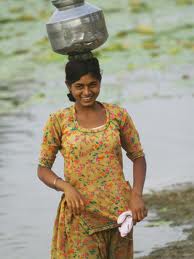
It seems like so many of us drift through everyday                                                                     life just waiting for the carryingwaterchance to escape from it, dragging ourselves through the week just to get to that weekend “get-away”, finding a retreat to go to, or, at the other end of the spectrum, engaging in unhealthy and self-violent activities in hopes of forgetting about life. Withdrawing, retreating from Life, essentially means not wanting to live it.

What can we do to live life to the fullest and not run from it? Acknowledging life as it is and, if possible, taking steps to change it is a start. That could be anything from finding a job you enjoy to eating better. Finding acceptance and gratitude for the things we cannot change can instill a sense of peace and open us up to lessons we need to learn. And embracing all that makes life life will open our eyes to the beauty that life is. Live life to the fullest by seeing the beauty in the everyday happenings of life: work, chores, caring for others, taking care of one’s health…

This Chinese Proverb epitomizes Living Life to the Fullest:

Before Enlightenment, I chopped wood and carried water.

After Enlightenment, I chopped wood and carried water.

Posted in Health & Healing, Meditations | Tagged , , , , | 1 Comment

An Eternal Pause

Sometimes we’re so busy wanting everything to be a certain                                                 way, that we don’t rosesee how beautiful and perfect our lives already are. Even the seemingly sad and unpleasant provide us with opportunities to learn and grow. Appreciate how beautiful everything in your life already is. And then, all of a sudden, all you need, you will see right in front of you…

Stop and smell the roses. Thank the thorns for pricking you and reminding you that you are full of life. And may your gardens blossom!

Posted in Meditations | Tagged , | Leave a comment

Creating the Space to Heal

As a healer I’m confronted on a regular basis with                                                                     the challenge of: How can I ExpandingUniversehelp facilitate the healing process? Healing is a complex process where not only the physical, but emotional, mental, and spiritual aspects need to be addressed as well. These aspects are all parts of our being, and when in balance and healthy, our well-being.

True healing does come from the inside out, but what if it can’t get out? What if one does not know that there is scar tissue stuck deep within a muscle affecting one’s gait and causing pain, or that there’s an emotional cyst in one’s neck causing stiffness and headaches from the stress of experiencing or witnessing a childhood trauma. Pain, wounds, anguish, stress, grief, loss…tend to cause us to contract to protect our injured selves physically, emotionally, mentally, and spiritually. Contraction is an attempt to hide from our pains.

Unfortunately, contraction also inhibits the healing process. Healing doesn’t feel good. All aspects of our pains need to be felt for them to heal. Through opening up, through expanding, we can create the space to heal. Blood will flow to clean out an infection, emotional blockages will release, mental fears will subside, and the soul will begin to shine through. With or without the assistance of healers, let’s all find ways to create the space for healing for ourselves and for others.

Posted in Health & Healing | Tagged , , , , , , , , | 2 Comments

Springtime: A Celebration of Death

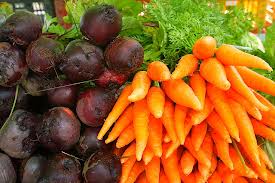
As I’ve spent countless hours the last couple                                                                               of months tilling, planting, and veggiesweeding my vegetable garden, I’ve come to appreciate more and more the beauty that is life…and death. Just think about it. Where does food truly come from? It comes from the earth, the dirt, which is composed of decomposing organic matter. From this decay of once living plants and animals, new life is nourished. If I did not add new compost to my garden each year, the soil would eventually become dry and rocky, unable to support life.

Death plays a vital role in sustaining life on Earth. Without the nourishment it provides, there would be no Spring, no beautiful blossoms, no fruit, no veggies, no food, no life. Life cannot exist without death. They are mutually dependent upon one another. In essence, they are one in the same in the ever changing process and continuous cycle of life and death. As we all watch our gardens grow and spring into life, let’s not forget to appreciate where it all comes from.

Posted in Meditations | Tagged , , , | Leave a comment

The First Limb of Yoga: Satya – Truth

The third practice of the first limb of yoga is to live a life of truthfulness and honesty. We should not lie, cheat, or deceive others or ourselves. Yes, ourselves. Much of the dishonesty towards others begins with self-delusion. These false beliefs many of us have about who we are is projected out into the world. We want others to think we are good, smart, beautiful, wealthy, special, better than others, etc. This need to obtain others’ approval of us and to get what we selfishly want leads to a life of dishonesty.

Practicing Satya means to live in truth. To live in truth, we need to humble our egos, and both acknowledge and accept who we have been and who we truly are. This may mean stepping up to our faults and deceptive behaviors and taking responsibility to come clean and ask for forgiveness. It takes an incredible amount of self-reflection, but once we become aware of who we have been trying to be, we can begin to clear out the clutter of delusions and make changes to be who we truly already are.

When we live in truth, life is just, good, and beautiful. This doesn’t mean everything in life will go perfectly smooth for us all the time, but we will be more aware of and in tune with the beauty that is the truth behind all that happens. Lies, deception, and illusions are transitory. Truth is real. It is always there, constant, and never changing. Though sometimes it may be hard to hear, it is not the truth, but the lie, that hurts. Truth only brings clarity and awareness. Let us all each day strive to live and be in the beauty of truth.

Posted in Yoga | Tagged , , , , | Leave a comment

Watching the Snow Fall

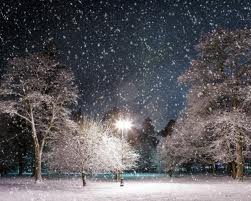
In the hustle and bustle of modern life,                                                                                 especially with all the seemingly snowfallconstant stimulation of electronics and technology, it’s all too easy to forget what a phone-less, wireless and wifi-less world is like. To experience this, many escape to the mountains, parks, and beaches seeking peace and stillness, and the basic need to connect with the earth and the world of nature which we are all a part of. Unfortunately, escape is always a temporary “fix”, an aspirin of sorts. The busy-ness of daily life is still there.

What if we changed our perspective and broadened our view of our daily environment and life around us? Even though modern technology is a part of our lives, we still live in and are surrounded by nature. With open eyes and ears, and all senses, we can be present and even still, while we carry on our daily lives and responsibilities. By eradicating the tunnel vision that screens and our minds create, we can open ourselves up to the magical world that is all around us. It takes time and practice, but with time and practice, everyday living can become like watching the snow fall – a beautiful and peaceful loud silence.

Posted in Meditations | Tagged , , , , | 2 Comments