What Is Love?

As we approach Valentine’s Day, many of us                                                                               are planning and preparing tolovingkindness celebrate love, but do we really know what that is? What is love? My brother summed up the answer to this perennial question best: Love is a verb. No, it’s not just a morpheme used to make a syntactical structure grammatical, but an action. Love is acting selflessly, doing what is best for others, and giving unconditionally.

For eons we’ve tried to understand what love is, but we’ve gotten stuck thinking that love is a noun – an object or person to be possessed. No one can ever own another’s feelings, choices, or actions. Love is not something that can be bought, earned, or taken. Love is a choice to let go of our selfish egos, and live with compassion and kindness. Selfishness and love are like oil and water. They just can’t mix.

Love is a truly selfless act. Let’s celebrate this Valentine’s Day, and every day, with acts of love for our family and friends, for strangers, for animals, and for our whole planet. All we need is…to love.

Posted in Meditations | Tagged , , , | Leave a comment

The First Limb of Yoga: Ahimsa and Asteya

The first limb of Yoga is Yama. The Yamas are the abstinence practices for actions from which we should constrain ourselves.

The first of these five practices is Ahimsa, non-violence. To practice non-violence we need to start watching ourselves and take note of how not only our actions, but also our words, thoughts, and energy affect others. Hitting someone is a blatant act of violence. What about harsh words and wishing someone ill will? We’ve all felt that knot in our stomachs when someone gives us the evil eye. Every little thing we do, say, think, and feel affects others in some way. Practicing non-violence compels us to be conscious of and to consider the consequences of all our actions. It forces us to push selfishness aside, and become loving and considerate individuals. Ahimsa is a practice of love.

The second practice is Asteya, non-stealing. Besides not robbing a bank or stealing someone’s wallet, this is the practice of not taking from others and not acquiring what we do not need or use. Material possessions can be taken from others, but so can intangible things such as energy. Some of us may have a friend or family member who drains our energy or brings us down whenever we’re around them. Or we may do it to others. This is energetic and emotional stealing.

Having and acquiring things that we do not need or that just sit stored away for years is stealing from those, like the homeless or a struggling unemployed family, who do need or could use those things. And it’s not just people we can steal from. Think about how that twenty minute shower or leaving the electronics plugged in when on a two week vacation is stealing vital resources from our planet. Practicing Asteya teaches us to not be wasteful and greedy.

Posted in Yoga | Tagged , , , | Leave a comment

Healing From the Inside Out

It’s that nagging cold that just won’t go away,                                                                           the back stiffness that’s been healinglayersthere on and off for years, or that inexplicable pain in the hip that makes activity impossible. These common “every day” ailments are, well, all too common. We seem to live in a world where having something wrong with us is almost the norm, and to alleviate the symptoms, we look for external solutions, such as physical therapy and pain pills.

Don’t get me wrong, medications, therapy, surgery, etc. definitely have their place and will often successfully treat an illness or injury. What about when these means aren’t successful or helpful? And I’m sure most of us can think of someone we know who is always getting sick or who continually hurts themsleves. We can do our best to take care of our physical selves by eating well, being active, and stretching, but our bodies do not exist separately from our emotional and spiritual selves. Whenever we get sick or injured, there is always an emotional/spiritual component. The challenge is figuring out and understanding what that is and how it all connects.

Some examples: Hanging onto anger or hurt could create stomach and intestinal problems. Working in an environment where co-workers are back-stabbing, could cause muscle spasms and hypertonicity in the back and shoulders. Having a roommate who doesn’t clean at all, could contribute to that pain in the neck that won’t go away.

If we gave our emotional and spiritual health as much attention as we do to our physical health, we’d live healthier lives and heal more quickly when we do get sick or injured. Whether it’s talking to a therapist, letting go of a grudge, or just spending ten minutes a day practicing meditation, there is something we all can do to heal from the inside out. We are a whole interconnected system of body, mind, and soul, and to be truly healthy, we need to be aware of and take care of all aspects of our being. There is a common saying out there: Our issues are in our tissues! If we ignore our issues, our tissues will let us know.

Posted in Health & Healing | Tagged , , , , | 2 Comments

Yoga Is a Way of Life

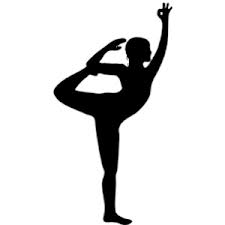
Huh? Many might ask: Isn’t yoga like a stretching                                                                   class or a great way to get a ShivanatarajaAsanaworkout in? While it is true that muscles will be lengthened, strengthened, and challenged in a typical yoga class, the physical practice of yoga, the Asana, wasn’t developed so we could burn some calories and look great in those tight fitting yoga clothes. Think of it as a type of moving meditation.

I will go more into depth on this in future posts, as I go through and discuss the Eight Limbs of Yoga, including the Asana practice. Like the Ten Commandments of Judaism and Christianity, and the Paramitas of Buddhism, the Eight Limbs of Yoga are guidelines and practices for how to live a good life, be a good person, and maybe even attain enlightenment. They are:

  1. Yama (abstinence practices): a) Ahimsa (non-violence), b) Asteya (non-stealing), c) Satya (truthfulness), d) Brahmacharya (continence/control of desire), and e) Aparigraha (non-hoarding).
  2. Niyama (ethical observances): a) Saucha (purity/cleanliness), b) Samtosha (contentment), c) Tapas (austerity), d) Isvara Pranidhanam (surrender/devotion to God), and e) Svadyaya (self-study).
  3. Asana (posture practices)
  4. Pranayama (breathing practices)
  5. Pratyahara (withdrawal of the senses)
  6. Dharana (concentration)
  7. Dhyana (meditation)
  8. Samadhi (absorption)

Though we may sweat, get toned, and burn off last night’s dessert in the yoga studio, yoga is not really just a workout. It is a spiritual philosphy that developed within the Hindu religion, and like the spiritual philosophies of many religions, it is a way of life.

Posted in Religions & Philosophies, Yoga | Tagged , , , , , , , , , | 2 Comments

Astrology: Guidance from Above

When most of us hear someone mention astrology,                                                                     we think about the Astromaphoroscope – the short tidbits of predictions for our sun signs at the back of magazines and newspapers. Many who read them are hoping to find out if this week or month they will get a raise, should play the lottery, or meet their true love. Most want to know, as an astrologer friend of mine says, “Where’s my money, and where’s my honey?”

Our horoscope and, much more extensively, our birthchart can indicate our financial and familial success, or lack thereof, but more importantly it can guide us towards finding our purpose in this life, both on the practical and material level, and on the spiritual level. It can point towards answers to questions that many of us have, such as: Why am I here? Where am I going? Who am I? What lessons do I need to learn? What should I be doing with my life?

Our birthcharts are our personal maps for the journey of our given lives and for the journey of our souls through time. Astrology can give us the guidance we need when feeling lost, but keep in mind that it is like a map, and we still need to make our own choices and decide which route to take.

To learn about Vedic Astrology, check out my book, Shedding Light on JyotishaVedic Astrology For Beginners

Posted in Astrology & Astronomy | Tagged , , , , | Leave a comment

Today is a Beautiful Day

It’s always so nice when I head out                                                                                                in the wee hours of the morning to take my Photo0075puppy on a stroll around the neighborhood and watch the sky light up in pinks and reds as the sun rises up to warm up the day. Feeling the golden light of the sun on my face, and smelling the scents of the trees and flowers and the wafts of coffee and breakfast drifting from kitchen windows, is such a pleasant way to start the day. “What a beautiful day it is today!” I often say to my puppy on such mornings. And my puppy, who before I adopted him had endured years of neglect and abuse, and yet has come out of that situation as complacent, wise, and loving as a once incarcerated Buddhist monk, always replies, “As they all are, Mummy. As they all are!”

Many mornings are not like this though. Often it’s cold and raining, but as we walk the neighborhood, we see the birds, insects, and plants playing in and drinking in the fresh rainwater. How refreshed and clean the rain makes everything! When it snows, a bright and beautiful loud silence surrounds everything. When it’s windy, the windchimes and trees get to dance and sing. When it’s all of the above…it’s an orchestra with a whole chorus singing!

Today it is cold and raining, and today is a beautiful day. As they all are.

Posted in Meditations | Tagged , , , , , , | 1 Comment

Healing Insights and Inspirations for Loving Living

Hello and welcome to my weblog! I decided to start up this blog as a means to heal, help, guide, and teach. Though topics of the posts will vary, they will have a spiritual theme. This is not a religious blog, per se, but I will reference some religious practices or teachings. I view all religions as guides for life and one’s spiritual journey. They are different paths, and one religion, a few, or none may suit or be helpful for a given individual. Some posts may be serious, some may be silly, but my hope is that they will inspire those who read them to heal and grow from within and to start or continue loving living!

peacockbanner

Meaning and Symbolism of the Peacock

chose the titleThrough the Peacock’s Eyes, for a couple of reasons: the symbolism of the peacock, and its connection to the Hindu goddess Saraswati. The symbolism of the peacock is similar across many cultures, from Christianity where it represents patience, love, eternal life, and immortality, to Buddhism where it represents wisdom, kindness, and compassion. The Bodhisattvas, such as Quan Yin and Avalokiteshvara, are often associated with the peacock because as the peacock can eat poison and not be affected by it, the Bodhisattvas can take in the poisonous emotions of others and not be affected by them.

The peacock’s habit of replacing its feathers yearly and its connection to the phoenix also make it a symbol of renewal, rebirth, and reincarnation. In ancient Greek mythology, when the “all-seeing” 100-eyed giant Argus died, the goddess Hera preserved his eyes on the peacock to honor him. Thus the peacock’s eyes themselves represent seeing, insight, and wisdom. The eyes on the peacock’s feathers are also thought to represent the stars in the heavens.

The Goddess Saraswati

In Hindu mythology, the vehicle for the goddess Saraswati is often the peacock. Saraswati is the goddess of wisdom, knowledge and learning, creativity, music, language, and writing. As her vehicle, the peacock helps her navigate through the world with compassion, wisdom, and understanding.

As a writer, spiritual counselor, and healer, Saraswati is my muse. May her guidance guide me to guide you.

Knowledge helps man find possibilities where once he saw problems. -Saraswati
Posted in Meditations | Tagged , , , , , , , , , | Leave a comment