The Buddhist Teaching Hidden Under the Robe of the Ghost of Christmas Present

Most know or have at least heard of the story of Ebenezer                                             Scrooge in Charles Dickens’ Ghost of Christmas Presentnovel, A Christmas Carol. In the story Scrooge learned through a night of nightmares, or time travel, and self-reflection that being greedy and miserly only brought him a life of loneliness and misery. When he awoke Christmas morning, he chose to begin living life by being kind, loving, and generous to those in his life and community. We could say that he embraced the meaning of Christmas, and that the main message in the story is one of Christian Love.

Embedded within this story, as with many great novels and literature, are other messages. Hidden under the robe of the ghost of Christmas present is a message that is taught across world religions and philosophies, though probably best known as a Buddhist teaching. Under his giant robe the ghost of Christmas present reveals to Scrooge “the banes of man”: Ignorance and Want. These banes of man, the things which cause and contribute to our suffering, are two of the three roots of disease and suffering in Tibetan Buddhist Medicine.

We can choose to live a life through ignorance: illusion, delusion, and lack of self-awareness and of compassion for others; and through want: desire, clinging, craving, possessing. Or, we can, like Ebenezer Scrooge, choose to awaken today free from the fetters that our own egos have put upon us, open our hearts, and live a life of kindness, love, and compassion. Like the Grinch, when he realized Christmas was not about the superficial decorations and feasting, nor about the shopping and the presents, so too can we expand from the fetters of ignorance and desire (and anger), and let our hearts grow more and more each and every day.
Posted in Religions & Philosophies | Tagged , , , , , , , , | 11 Comments

The Four Noble Truths: The Noble Eightfold Path

The first three of the Four Noble Truths were                                                                           developed by the Buddha to teachDLquote us about the nature of suffering. With the fourth part the Buddha provides and shows us the pathway to overcome our suffering: The Noble Eightfold Path. By practicing and following this path, we can become more and more able to surrender our egos and free ourselves from the roots of suffering (ignorance, desire, and anger) in order to live a life of Truth, Love, and Compassion.

The Noble Eightfold Path

1) Right Understanding

2) Right Intention

3) Right Speech

4) Right Action

5) Right Livelihood

6) Right Effort

7) Right Mindfulness

8) Right Concentration

Following the Noble Eightfold Path is a continuous practice in which we must try to be aware and conscious of how our actions, thoughts, words, and intentions affect others. By doing what is right and compassionate towards others, we will overcome our suffering.

Posted in Religions & Philosophies | Tagged , , , , , | Leave a comment

More on the Meaning of Christmas

During Christmastide and the whole Holiday                                                                             Season, many of us embraceLittleMatchGirl Christ’s teachings of love and kindness by doing charitable acts. Some donate to the poor and needy, buy gifts for strangers, or volunteer serving dinner at a shelter. These are all very honorable deeds, but often once the holidays are over, most of us forget that the homeless, the hungry, the struggling, the sick, orphans, and those who barely get by still are in need of charity.

Charity comes from the Latin word caritas: love, affection, dear-ness. It is a synonym for kindness, consideration, and Christian love, or agape. Agape is the Ancient Greek word for charity and love. Today agape stands for unselfish, spiritual, brotherly, and Godly love.

Throughout the Christmas season and into the New Year and beyond, let us all practice to make a continuous effort to be kind, loving, considerate, and charitable to all others however we can. Even just a kind smile and a friendly “hello” can be a precious gift. May we all embrace the meaning of Christmas to spread love throughout the year to everyone! And, as Tiny Tim said in A Christmas CarolGod bless us everyone!

Posted in Religions & Philosophies | Tagged , , , , , , , , , , , | Leave a comment

The Meaning of Christmas

It’s the Christmas season. A time when we shop, give gifts,                                                       feast, and vacation. peace&loveAt least that is what it appears to be on the surface. If we look beyond the superficial and ask, study, and learn about who this Jesus Christ was, and why so many around the globe celebrate his birth, the true meaning of Christmas shines through.

Whether you believe he was a real person, a savior, a prophet, or a mythical personification or metaphorical person, Jesus Christ taught and preached only peace, love, and kindness. The Christmas season is a time to reflect on his teachings and how each of us imbues his teachings into our lives, not only at Christmastime, but throughout the year. Loving our neighbors and being kind to others should be a continuous practice for all of us.

As the angel declared upon Christ’s birth:

Δοξα εν υψιστοις θεω
και επι γης ειρηνη
εν ανθρωποις ευδοκιας

-Luke 2:14

Or, as Linus said in A Charlie Brown Christmas:

Glory to God in the Highest                                                                                                       and on earth peace                                                                                                                               and goodwill toward men!

Posted in Religions & Philosophies | Tagged , , , , , , , , , , , | 1 Comment

Bhakti Yoga: The Path of Love

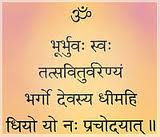
The practice of Bhakti Yoga is usually described asGayatriMantra                      devotion to a personal god or the Divine through listening to, reading, and studying the scriptures; singing and chanting mantras, worshiping and paying homage, offering service, and surrendering to God. All these practices of devotion lead to the last one: surrender. When we have surrendered our egos and its need to cling and control, we free our hearts to live through love and in faith. We have surrendered ourselves to God and to a life of Love. The devotional practices of Bhakti Yoga help to keep us in check, for this is a practice and we are human after all.

For some of us, practicing Bhakti Yoga may mean going to a weekly service or reading holy texts, such as the Yoga Sutras. For others it may mean a daily meditation, japa mala, or even asana practice. It may also mean giving service, for our devotion to God, Love, and the Divine can also be expressed through our actions, Karma Yoga. Service/Karma is often a greater indication of our spirituality and soulfulness than how much we sit in meditation or do an asana practice. Let us all strive to surrender ourselves and devote our lives to all that is Divine…to the Path of Love.

That one I love who is incapable of ill will, who is friendly and compassionate. Living beyond the reach of  and mine and of pleasure and pain, patient, contented, self-controlled, firm in faith, with all his heart and all his mind given to me – with such a one I am in love.

-Lord Krishna, Bhagavad Gita 12:13-14

The nature of Bhakti is adoration, worship, self-offering to what is greater than oneself; the nature of love is a feeling or a seeking for closeness and union. Self-giving is the character of both; both are necessary in the yoga and each gets its full force when supported by the other. Bhakti is not an experience, it is a state of the heart and soul. 

-Sri Aurobindo, The Integral Yoga

However many holy words you read, however many you speak, what good will they do you if you do not act on upon them?

-Buddha

Posted in Yoga | Tagged , , , , , , , , , , , , , , , , , | 4 Comments

Learning from Mistakes, a Great Teacher!

We all make mistakes during our lifetimes, some                                                                   big, some small, some we regret, andMistakes some we learn from. All mistakes are opportunities to learn and grow. Getting an answer wrong on a test, gives us the chance to learn the right answer. Realizing that a wrong decision was made, provides the awareness to make the right choice next time. Unfortunately, many of us fear growth and change, and instead ignore mistakes. Ignorance leads to repeated mistakes and repeated bad decisions that usually only leads to worse and worse mistakes, which not only harm ourselves but hurt others as well. Ignorance, driven by the ego’s fear of letting go, does not allow for a life full of knowledge, wisdom, love, and compassion. Failure to learn and grow leads to stagnation and destructiveness.

When we set aside the ego’s pride and fear, and acknowledge the mistakes we have made, at that moment we open up our hearts. Learning what we can from our mistakes opens our minds to learn more about the subject matter, about our lives, and most importantly about ourselves. When we have learned from our mistakes, when we have grown from them, we have no regrets. We can truly be our own greatest teacher. Let us all learn from our mistakes so that we can continually grow to be more loving, compassionate, happy, and joyful people with ourselves and towards others, even if they have not yet learned from their mistakes.

Posted in Meditations | Tagged , , , , , , , | 3 Comments

Pilgrimage to the Divine: Transcending the Ego

This past week was the annual Islamic Hajj,                                                                               the pilgrimage to Mecca. As with pilgrimsall religious pilgrimages, those who undertake these sacred journeys are usually seeking an understanding or a connection with their God and the Divine. During the Hajj, pilgrims perform cleansing rituals and adorn themselves in the same white clothes. Everyone looks the same, regardless of race, gender, social status, wealth, or education. All are equal under God. The things that separate people from one another, the identities of the ego, are wiped clean so that they may stand “naked” before God.

It is only when we set our egos aside that we can bare our true selves, our souls, to the world and the Divine. Underneath the delusions and illusions of the ego that each of us is separate, lies the naked Truth that we are all interconnected beings on our interwoven journeys to understand Life, Love, God, and the Universe. By striving each day to not let the clinging of the ego control us, we can free ourselves to become one with our fellow man, all sentient beings, and the Divine. This surrendering of the ego to allow union and oneness with All is Yoga. We are all one and the same. We are all a part of the Universe, of the Divine, and of God. Let us all embrace this beautiful responsibility by treating all others with the same love and respect that we wish to receive.

Just as hands and other limbs are thought of as the members of a body, can we likewise not consider others as the limbs and members of a living whole?

– Shantideva 8:114

And One is God the Father of all, and over all, and with all, and in us all.  

Ephesians 4:6

Know ye not…that the spirit of God dwelleth within you?

-Corinthians 3:16

Posted in Religions & Philosophies | Tagged , , , , , , , , , , , | Leave a comment

The Four Noble Truths: The Truth to The Cessation of Suffering (Nirodha)

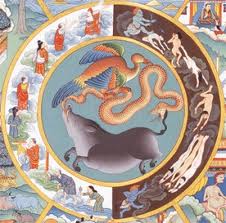
If we choose to become spiritual warriors, how will                                                                   we conquer our enemy? HowTibWheelofLife can we cease suffering? How do we stop desiring, clinging, and craving? How do we silence the ego and bring stillness to the mind? We can free ourselves from our suffering by letting go of clinging and by surrendering our egos so that our souls can shine through. Surrender is a powerful weapon which takes great strength to wield, but with continuous practice we will be able to set our selfishness aside and open our hearts…to Love.

In Tibetan Medicine, Love and Compassion is the ultimate antidote for all disease and suffering. When we truly love, we cannot be selfish and we cannot crave and desire; we can only give unconditionally. When we love, our souls, our true Selves, unite with Truth, God, the Universe… This is freedom! Free from our egos, free from the cycle of ignorance, desire, and fear/anger, free from suffering.

Love is

the perfect stillness

and the greatest excitement, and most profound act,

and the word almost as complete

as His name

– Rabia of Basra, Islamic Sufi saint

God came to my house and asked for charity.

And I fell on my knees and cried,

“Beloved, what may I give?”

“Just love,” He said.

“Just love.”

Saint Francis of Assisi

Even after all this time

the sun never says to the earth,

“You owe me.”

Look what happens with a love like that –

it lights the whole world.

– Hafiz, Persian poet

Posted in Religions & Philosophies | Tagged , , , , , , , , , , , , , | Leave a comment

The Four Noble Truths: The Truth of The Origin of Suffering (Samudaya)

What causes us to suffer? What is it that                                                                                     makes us dissatisfied with ourselves, RootsofIllnessour lives, and the world around us? What is the origin of our suffering? It is the clinging to those mindsets, beliefs, and desires of the ego that cloud our vision and mask our understanding of realty, of Truth, behind the veil of illusion. This veil of illusion, Maya, is created by the ego’s desires and cravings. The selfishness of the ego mind makes us ignorant…it gives us the illusion that we are separate from God, from the Universe, from Truth. This feeling of detachment from the true nature of reality causes us to suffer, and yet the fear of letting go of our attachment to our egos drives us to cling even more and escape behind Maya.

Ignorance, Desire, and Fear/Anger are, in Tibetan Buddhist Medicine, the three fundamental roots of disease and of cyclic existence, the cycle of rebirth into this realm of suffering. It is perpetuated by the illusory cycle of ignorance > desire > fear > ignorance, and so forth. The second Noble Truth is our so-called “wake-up call”. To free ourselves from our suffering, our selfishness, we must not only acknowledge that we are suffering, but we must also become aware from within that we, our egos, are the roots to our suffering.

As explained in the Bhagavad Gita 3:36-41:

Arjuna: What is the force that binds us to selfish deeds, O Krishna? What power moves us, even against our will, as if forcing us?

Krishna: It is selfish desire and anger, arising from the guna of rajas; these are the appetites and evils which threaten a person in this life. Just as a fire is covered by smoke and a mirror is obscured by dust, just as the embryo rests deep within the womb, knowledge is hidden by selfish desire – hidden, Arjuna, by this unquenchable fire for self-satisfaction, the inveterable enemy of the wise. Selfish desire is found in the senses, mind, and intellect, misleading them and burying the understanding in delusion. Fight with all your strength, Arjuna! Controlling your senses, conquer your enemy, the destroyer of knowledge and realization. 

It sounds simple at first, but for most of us it may take many years, or many lifetimes, to achieve this full self-awareness. It takes practice! Like the warrior Arjuna, we must strive to become spiritual warriors for Truth in order to face the origin of our suffering.

Posted in Religions & Philosophies | Tagged , , , , , , , , , , , , | Leave a comment

The Four Noble Truths: There Is Suffering (Dukkha)

The Buddha developed the Four Noble Truths as a                                                               means for each of us to TeachingBuddhaunderstand the nature of suffering, i.e. what suffering is, and to show us a way to overcome it. Though they are his teachings and guidelines, each of us still has to come to the awareness of what suffering is and how to free ourselves from it on our own. Being told or studying how to do something doesn’t mean we truly know and understand it. We must go through the process and do it ourselves. And usually it takes a lot of practice, practice, practice! Understanding ourselves from within is no different.

The first of the Four Noble Truths is Dukkha, which means suffering or dissatisfaction, and is often stated as: there is suffering. We all are aware of the external sufferings of the world: violence, poverty, etc., but to free ourselves from suffering, we must first acknowledge that suffering exists within ourselves. The first Noble Truth is telling us to look deep inside and self-reflect on what it is that we do mentally, emotionally, and psychologically that causes our own suffering. What thoughts of the mind or beliefs of the ego are we holding onto that cause us to be continually dissatisfied with ourselves and with life? In what ways do our mindsets and attitudes create and contribute to our suffering? We must acknowledge that there is suffering within us before we can truly understand its nature.

Posted in Religions & Philosophies | Tagged , , , , , | Leave a comment