Mantra: Divine Vibrations of All

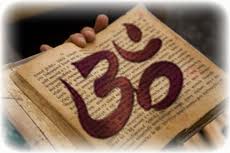
Mantras are chants, or more specifically, energetic                                                    vibrations of words that connect us Energywith the vibrations of the True Self, the Universe, the One. The word mantra comes from Sanskrit. Its two syllables can be broken down as: man – to reflect, to think, to be aware; and tra – an instrument which saves. Mantras are instruments that save us from the ego’s perception that each of us is separate from everyone and everything. Chanting mantra is a meditation practice to help bring us to the awareness that we are all Consciousness, the True Self, the One. 

Religions and spiritual practices all over the world incorporate some from of chanting, singing, and music from the simple mantra of Aum, to devotional hymns to a specific god, to the transcendental vibration of the beat of a drum. They are all vibrations of energy just as we and everything else in the universe are vibrations of energy. The divine vibrations of mantras help us to connect to the divine vibrations of the True Self, the All, the One.

The luminous being of the perfect consciousness which is non-different from the entire cosmos and which is inherent in the multitude of words whose essence consists in the knowledge of the highest non dualism is the secret of mantra.

– Shiva Sutras

Here are three mantras that can help us connect to the Divine Consciousness:

1) Gayatri Mantra

The Gayatri Mantra is one of the most ancient mantras known. It comes from the Rig Veda, which is an ancient Vedic collection of sacred hymns from around 3000-3500 years ago. It was given by the Supreme Being to the Rishi (Sage) Vishvamitra, who recorded the Gayatri Mantra in the verses of the Rig Veda to share with all of humanity.

The Gayatri Mantra is said to bring wisdom and enlightenment, and to purify both the singer and the listener. We could say that it is a gift from the Universe to help us humans gain clarity and awareness. Since this mantra addresses the Sun-god, it is often recited at sunrise and sunset, but the vibrational energy of the mantra is sure to be a beneficial meditation practice any time of day.

Om bhur bhuvah svah / tat savitur varenyam / bhargo devasya dhimahi / dhiyo yo nah prachodayat

Om earth, heaven, light (created) by God (Savitr/Surya/Sun-god), whose excellent glory we may attain, and who may enlighten our prayers (minds/meditation).

To listen to the Gayatri Mantra click here.

2) Mantra to the Divine Mother

The next mantra is a mantra to the Divine Mother. Most religions, whether monotheistic or polytheistic, have a figure who represents the Divine Mother and Mother Earth, such as Gaia, the Virgin Mary, Frigg, Demeter, Tara, Pachamama, Isis, Prakriti, and Shakti. Ancestral spirits, the souls of mothers, grandmothers, etc. who have past, can also represent the Divine Mother.

The Divine Mother represents the the creative force of the Universe and on the mundane level, the creative force of motherhood and nature. The Divine Mother nourishes and sustains life. She is the cosmic mother of time and space, the dynamic action of the Divine Oneness. She is an aspect of and the creative force of the Divine Oneness manifesting as Nature and Life.

This mantra to the Divine Mother was written by Shri Aurobindo, based on a traditional Indian chant:

Om Anandamayi, Chaitanyamayi, Satyamayi, Parame Swari.

Om, She full of Bliss, She full of Consciousness, She full of Truth, She who is Supreme.

To listen to this mantra to the Divine Mother click here.

3) Twameva Sarvam Mantra

The Twameva Sarvam mantra, sometimes called the Twameva Mata mantra after the first two words, is a another beautiful Vedic meditation chant. Twameva Sarvam means: You are all in all (everything). This mantra is a meditation on the True Self, the Ultimate Reality, the Universe, the Oneness of All.

Twameva mata cha pita twameva, Twameva bandhu cha sakha twameva, Twameva vidya dravinam twameva, Twameva sarvam mama deva devah.

You are my mother and my father, You are my friend and my companion, You are all wisdom and all wealth, You are all in all, the utmost Divine.

To listen to the Twameva Sarvam Mantra click here.

Who is this Self on whom we meditate? Is it the Self by which we see, hear, smell, and taste, through which we speak words? Is Self the mind by which we perceive, direct, understand, know, remember, think, will, and desire? These are but servants of the Self, who is pure consciousness. This Self is all in all.

– Aitareya Upanishad

Posted in Religions & Philosophies | Tagged , , , , , , , , , , | 8 Comments

The Fourth Limb of Yoga: Pranayama

The fourth limb of yoga is Pranayama. Etymologically                                             Pranayama can be broken down inprana two ways: pran (breathe/breathing) + ayam (expansion), or prana (breath, life force) + yama (control, restrain). I’ve come across both explanations in various places, but I feel taking both etymologies together fully encompasses what Pranayama is about.

Prana is our breath, our life energy, and the breath of the soul. It is the vital force of the True Self. Pranayama practices such as Ujjayi, Anuloma-Viloma, Kapalabhati, etc. teach us how to control our breath. Through breath control we can expand our ribcages, increase the oxygen in our bodies which gives us more energy and promotes healing, open up the nadis (energy channels), and decrease stress. Pranayama practices can also be helpful tools for meditation. To still the mind we can turn our drishti, our inner focus, towards our breath.

By learning Pranayama practices, we learn ways to control our breath, but it is through this control of the breath that we learn to expand our life force. As we expand the breath throughout our bodies and minds, we expand our souls. Through Pranayama practices we can expand beyond the limits of the body and mind and connect with the vibrations of the universal prana.

Whatever moves in the universe, whether it is either seen or heard, whether it is within or without – it is pervaded by breath.

– Mahanarayana Upanishad

There is an intimate connection between the breath, nerve currents, and control of the inner prana or vital forces. Prana becomes visible on the physical plane as motion and action, and on the mental plane as thought. Pranayama is the means by which a yogi tries to realize within his individual body the whole cosmic nature, and attempts to attain perfection by attaining all the powers of the universe.

– Swami Sivananda

Prana is the sun…The sun gives light and life to all who live, east and west, north and south, above, below; It is the prana of the universe…Prana burns as fire; he shines like the sun; he rains as the cloud; he blows as the wind; he crashes as the thunder in the sky. He is earth; he has form and no form; Prana is immortality.

– Prashna Upanishad

Posted in Yoga | Tagged , , , , , , , , , | 3 Comments

Stepping Into the Unknown: The Exciting Adventure Called Change

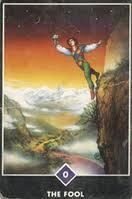
fool2As Heraclitus knew, change is always happening whether we choose to make change or not. Things change: flowers whither, seeds sprout, caterpillars become butterflies, clothes become worn, waves erode the shores… Change happens; it’s just part of life, but sometimes we have to choose to make change. Making change can be scary, for it means we are stepping into the unknown. It means we can no longer control the present and the future. It means we have to let go of our ego’s desire to hang onto things, face our fear and anxiety about the future, have faith in our ability to create our lives, and take that step into that exciting adventure called change.

When I feel scared about making changes in my life, the vision of the Fool card of the Tarot appears. The Tarot is a complex language of symbols imbued with spiritual and metaphysical meaning. In this card the Fool looks like a happy-go-lucky young man, carrying the white roses of purity and innocence and embarking on a journey right off a cliff into a huge crevasse! Is the Fool completely unaware of his surroundings and the impending risk of stepping off into the abyss below? Or, has he made the decision to move forward on his life’s journey, acting on faith that the divine will keep him safe and guide him in the right direction as he steps into the unknown, the future?

The Fool card is numbered zero. Zero is nothing, empty, yet full of all potential. The “0” is both a window to offer us vision to our possibilities, and also the doorway that offers us passage towards personal growth and actualizing our potentials and our dreams. When we choose to make change, we free ourselves from the chains of worry and the need to know and control everything. When we choose change, we open ourselves up to explore the adventure that is life. By stepping into the unknown, we connect with our True Self.

No matter how much we try to plan it out, the future is truly unknown. Having faith in ourselves and not letting fear make our decisions for us, will help us deal with changes that happen and the changes we make ourselves. The unknown is an expansive and dark place. With knowledge and wisdom guiding us, we can illuminate the darkness. Anxiety about the future can burn out any light. May the inner light of our True Self guide us on our journeys into the unknown, the exciting adventure called change.
Posted in Meditations | Tagged , , , , , , , , , | 10 Comments

The Third Limb of Yoga: Asana

The third limb of yoga is Asana. Of the eight limbs of yoga                                                    the Asana practice is by farAsana the most popular worldwide, however it wasn’t developed as a workout routine so we could look good and burn off some extra calories. An Asana practice is a means to promote, heal, and maintain physical and mental health. Our physical bodies are the vehicles with which we function in this world as we travel on our inward spiritual journeys. The Asanas help us develop control of our bodies by improving strength and flexibility, which helps us develop inner balance, and by opening up energy centers and channels (chakras, nadis), which leads to higher awareness. Through an Asana practice we can develop sound bodies so that we can also develop sound minds.

Originally there were 8,400,000 Asanas. Luckily we don’t have to master nor do we have to learn that many in order to develop self-awareness of our bodies, and in turn of our minds and souls. Asana, which means “seat”, was a practice developed so we could sit in one seat for a long period of time in silence…for meditation. An Asana practice is about developing wholeness and self-awareness of the body and the mind, of the interconnectedness of the body and mind, and of the body and mind’s interconnectedness to the Self and the Divine.

Those who aspire to the state of yoga should seek the Self in inner solitude through meditation. With body and mind controlled they should constantly practice one-pointedness, free from expectations and attachment to material possessions.

– Shri Krishna, Bhagavad Gita 6:10

Self-awareness is the opposite of self-consciousness. When you are self-aware, you are fully within yourself, not outside yourself looking in. You are aware of what you are doing without ego and pride…Watch yourself from the inside. It is full of silence.

– B.K.S. Iyengar

Posted in Yoga | Tagged , , , , , , , , , , , | 11 Comments

Who Is Our True Self?

Who is our True Self? Or a better way to ask that question                                                    is: What is our True Self?TrueSelf Why what?…because the True Self is not an individual identity. The True Self is the piece inside of each of us that is connected and interconnected to the True Self in everybody else, all sentient beings, and to the energy of existence or the breath of life. The True Self has many other names: Spirit, God, Higher Self, Inner Wisdom, Consciousness, Being, Soul, and Heart to name a few. A different term may resonate more easily with each us individually, but they are all different ways our minds have tried to conceptualize the very abstract concept of a Continuum of Being, the True Self.

In order to discover, understand, and live by the True Self, we must continually practice to be aware of our own individual selves, the ego, and continually strive to not let the ego drive our lives. We must question everything as we seek the Truth, but keep in mind that Truth is not something that can be possessed. It is not an object, but a way of Being. Being spiritual, being our True Selves, is about how we live our lives, not about what we have, including our egos. Anything that we wish to possess, will not bring us Truth and Joy. We must practice and strive to be aware so that we can be true to ourselves and in turn true to all others. Through awareness we can live by our True Self, our Being.

The meaning of man’s life…is not measured by what he has, but by what he is.

– Stephen Batchelor, former Buddhist monk and lecturer

The Truth is what gets uncovered and unhidden when we strip away the ego’s veils of illusion. As each veil comes down, we will slowly begin to see more and more clearly as our True Self shines through more and more brightly.

This νοειν is what is ‘true’ in the purest and most primordial sense; that is to say, it merely discovers, and does so in such a way that it can never cover up.

– Martin Heidegger

As we practice awareness, seek to understand our True Self, and live in Truth we begin to allow and create the space to listen to our inner voice which comes from our hearts. This inner voice is our True Self emerging and awakening. As we learn to listen to our hearts and trust its message, our egos will challenge us. Part of this process of self-awareness is learning to differentiate what is truly in our hearts/our True Self, and what is the desire of the ego. Desire comes not from the heart. The Heart/Soul/True Self can only love; it cannot desire. The True Self is Love.

Your vision will become clear only when you look into your heart. Who looks outside, dreams…who looks inside, awakens.

– Carl Jung

God came to my house and asked for charity. And I fell on my knees and cried, “Beloved what may I give?”

“Just love,” He said. “Just love.”

– Saint Francis of Assisi

Posted in Religions & Philosophies | Tagged , , , , , , , , , , , | 8 Comments

We Are Spiritual Beings Having a Human Experience

Who are we? Who is each of us? Who am I? Who                                                                    are you? We humans have probablySpiritual Beings having a Human Experience been asking ourselves these existential questions since human existence began. These questions arise from within as we seek to unveil the illusions of the individual ego. As we seek to understand ourselves and the meaning of life, and as we seek to find answers, our souls, our True Selves, enlightenment, and God, we can get caught up in the seeking, which itself can be another veil of illusion (Maya).

When we get caught up in the seeking, it is because we are seeking something outside of ourselves. Instead, we need to turn our seeking inward to discover and understand the obstacles within that are hindering us from finding what we seek. Once we pull down all the veils, break down the mental blockages, and push aside anxiety and fear, we will see the answers that we already have inside. Wisdom and enlightenment come from within. God is in all of us. We are all already the spiritual beings we seek to be.

We are not human beings having a spiritual experience; we are spiritual beings having a human experience.

– Pierre Teilhard de Chardin, Jesuit priest and philosopher

We are spiritual beings having a human experience. As humans we are not perfect, but we can continually strive to understand and be our True Selves, the Self that is part of a greater whole, the Universe.

नर्तक आत्मा । Nartaka Aatmaa                                                                                                    —Such a one who has realized his essential spiritual nature is a Self that is only a dancer on the world stage.

– Shiva Sutra #9, section 3

Posted in Religions & Philosophies | Tagged , , , , | 5 Comments

Jnana Yoga: The Path of Knowledge

There are Four Paths of Yoga: Karma Yoga, the path                                                                 of service; Bhakti Yoga, the path of Sanskrit Booklove; Raja Yoga, the path of Ashtanga, or the Eight Limbs of Yoga; and Jnana Yoga, the path of knowledge. The path of knowledge does involve study: study of sacred texts and study to gain knowledge of life and existence. This path of knowledge and study will be different for each of us. For the Buddha, it was contemplating and meditating on suffering. For Einstein, it was through the study of physics.

Every one who is seriously involved in the pursuit of science becomes convinced that a spirit is manifest in the laws of the Universe-a spirit vastly superior to that of man, and one in the face of which we with our modest powers must feel humble.

– Albert Einstein

Whatever path we take towards knowledge, the ultimate goal is to attain knowledge of our timeless and True Self, or Atman, and to achieve the understanding of the expansive and ultimate reality of Brahman, the Universe and Absolute Oneness of All. Realization of Atman is knowledge that we are not our bodies and minds, but souls on a journey towards union, or yoga, with All.

The Self is the sun shining in the sky, the wind blowing in space; he is the fire at the altar and in the home the guest; he dwells in human beings, in gods, in truth, and in the vast firmament; he is the fish born in water, the plant growing on earth, the river flowing down from the mountain. For the Self is supreme!…The Self is the light reflected by all.

– Yama, the god of death, Katha Upanishad

Posted in Yoga | Tagged , , , , , , , , , , , , | 4 Comments

The Second Limb of Yoga: Tapas, Ishvara Pranidanam, & Svadhyaya

The other three observances of Niyama, the                                                                       second limb of yoga, are: Tapas, IshvaraYogaMeditation Pranidanam, and Svadhyaya. Tapas means heat, or hot energy, but it is usually described as austerity or simplicity. The idea is that through austerity and life simplifying actions we can burn away the desires and cravings of the ego to free our souls for the spiritual path. Observing Tapas requires practicing self-control, but we don’t necessarily have to become wandering mendicants. Most of us, however, can cut back on excesses in our lives, whether it’s sweets and junk food, too much television, or taking a 20 minute shower. Taking even small steps to simplify our lives and be less wasteful will not only help clear the way for more soul development, but it will also improve our health and help the environment.

Ishvara Pranidanam means devotion or surrender to God, or the Divine. This concept is very similar to Bhakti Yoga – utilizing the study of shastras, other sacred texts, scripture, sutras, and mantra to surrender the ego and strive for oneness with God, the Divine, All.

Svadhyaya is self-study, both studying the sacred texts and prayer on one’s own, and studying one’s self. It’s goal is awareness and understanding of the body, the mind, and emotions. Svadhyaya is learning about the needs and proper care of the body as a vehicle for the soul, as well as studying why thoughts and emotions arise and how we can observe those thoughts and emotions without becoming attached to them so we can free our souls to just be.

Posted in Yoga | Tagged , , , , , , , , , , , , , , | Leave a comment

The Second Limb of Yoga (Niyama): Saucha and Santosha

With the first limb of yoga, or Yama, I discussed the                                                   abstinence practices for actions fromYogaSunset which we should constrain ourselves: Ahimsa and Asteya, Satya, and Brahmacharya and Aparigraha. Now let’s take a look at the second limb of yoga, Niyama. The Niyamas are observances, prescribed acts that we should follow when aspiring for the spiritual path of the yogi or yogini. As with the Yamas, there are five Niyamas.

The first of these observances is Saucha. Saucha means cleanliness or purity. Often in yoga studio bathrooms there is a sign posted reminding us to observe Saucha by washing our hands, etc. Many of us have also seen pictures or heard of Hindus and Yogis bathing themselves in the Ganges for spiritual purposes. Yes, Saucha is about personal hygiene, but its full meaning is to live a life of cleanliness and purity both internally and externally. Externally we clean our bodies, homes, and environment. Internally we purify our bodies by hydrating well, eating healthy nourishing foods, and avoiding toxins. Most importantly, we observe Saucha internally by having good and pure intentions in all that we do and by acting out of love and compassion.

The second observance is Santosha. Santosha means contentment. It is being at peace with what is, with what you have, and with the present moment, the now. However, this doesn’t mean that you should not take action, make change, and live your life. It does mean trying to not let the mind dwell on or worry about things that have past or that we cannot do anything about. Being content requires acceptance of the way things are, and not letting the desires and cravings of the ego to want more and more cause us suffering and dissatisfaction.

Posted in Yoga | Tagged , , , , , , , , , , , , , , | Leave a comment

Our State of Health and Happiness

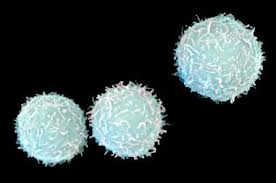
We’ve all experienced the discomfort and pain of                                                                   being sick or injured. It’s definitely not WhiteBloodCellspleasant, and many of us would probably say that when we’re in pain, we’re not happy. Even though the pursuit of happiness is about developing a state of being, inner peace, and healthy relationships, doctors and scientists have also discovered that our state of health plays a role in our happiness. Specifically, it’s the state of our immune systems that can either increase the risk of depression and mental illness, or increase our feeling of peace and happiness.

Quinolinic acid, which is produced by immune cells called macrophages, is found in elevated levels in people who suffer from depression and other mental and psychiatric disorders. These high levels indicate that the immune system has been very active or overactive. Studies with mice have also shown that an overactive immune response as well as an increase in inflammation leads to depression. Chronic inflammation itself can damage the body, including the brain, which could also lead to mental illness.

Besides doing the inner spiritual and emotional work to experience happiness, we need to take care of our bodies. Our bodies are our vehicles to experience life, and if we maintain them as best as we can, they can contribute to our state of happiness. Though many of us are healthy, many of us are not. All of us, however, can hydrate our bodies well, eat plenty of fresh fruits and vegetables (which have been shown to help increase happiness because of how they support and bolster the immune system), cut down on or eliminate ingesting meat and toxins (which trigger an inflammatory and immune response), try to avoid illness and injury, and get treated properly when we do get sick or injured.

It’s that time of year when many of us make our New Year’s resolutions, which are usually things that we think will make us happy. Let’s all put taking care of our health at the top of our lists. May we all truly have a Happy New Year!

Posted in Health & Healing | Tagged , , , , , | 2 Comments