Simple Feng Shui Tips for Healing, Balance, and Flow

Feng Shui is a Chinese term that means wind-water.                                                                It is a system designed to bringimages balance, harmony, and flow to the energy, called Chi, of space: a room, an office, a garden, or a home. Improving the flow of Chi in the spaces we occupy can help us feel more relaxed, balanced, harmonious, as well as productive. It can also facilitate any healing processes that we may be going through. Feng Shui principles are laid out according to the five elements in Traditional Chinese Medicine: earth, metal, fire, water, and wood; and according to directions, or compass designations. “Feng Shui-ing” your space can become a very complex and expensive re-decorating and redesigning process, but here are some inexpensive and simple tips to Feng Shui your home, or other space:

1) The Directions:

The first step is to look at the directions and learn what areas of your life they represent. Enhancing the flow of Chi in a certain sector of your home may give a boost to that area of your life. For example, if your career seems stagnant, doing some Feng Shui in the North sector may help to get things moving in your career.

  • North = Career
  • Northeast = Wisdom, Knowledge, and Studies
  • East = Health and Family
  • Southeast = Wealth
  • South = Fame
  • Southwest = Relationships
  • West = Creativity and Children
  • Northwest = Mentors and Spirit Guides

2) Remove Clutter:

Clutter, piles, and junk block and stagnate the flow of Chi. Donate those old clothes, clean the pile of dishes, and recycle that stack of magazines and newspapers. Regularly organizing and cleaning your space also perks up the flow of Chi.

3) Re-arrange Furniture:

Move furniture around to enhance the flow of energy. Arrange furniture so that you can move around the room in a circular direction, versus zig-zagging or running into obstacles. Also, ideally you want to see the entrance to a room or space from where you are – lying in bed, sitting at the table, or on your couch if possible.

4) Use Mirrors and Crystals:

Mirrors and crystals can reflect, deflect, and bend the flow of Chi where there are dead-ends, small spaces, and dark areas where there is not much natural light. For example, I once hung a crystal at the top of a staircase that looked like an opening to a dead-end to encourage the flow of both light and Chi.

5) Add Color:

My favorite and an inexpensive way to enliven, refresh and Feng Shui a space is to paint the walls or add items that are the dominant colors for that direction:

  • North: black, white, and blue
  • Northeast: blue, green, and white
  • East: green, yellow, orange, and brown
  • Southeast: purple, violet, burgundy, and sage
  • South: red and orange
  • Southwest: pink, yellow, beige
  • West: gold, white
  • Northwest: silver, white, and black

6) Do you like it?

The simplest and most important part of Feng Shui is liking your surroundings, wanting to be there, and being productive in it. Ask yourself: Do you like the space? Are you comfortable in it? Do you feel relaxed and enjoy being there? If not, try some of these simple tips to Feng Shui your home, and have fun doing it!
Posted in Health & Healing | Tagged , , , , , , , , , , , | 16 Comments

An Astrological Pie (chart) Recipe

astro_2gw_01_julie_hp.77269.52676

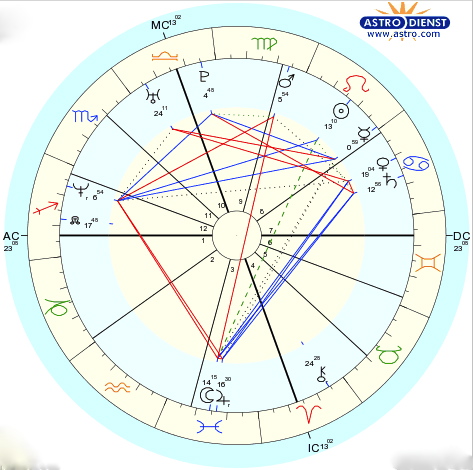
My Western Astrology Natal Chart

When Linda at Litebeing Chronicles had her 111 Global Party, to celebrate she offered a free Western Astrology birth chart reading to three lucky readers. Though I’ve had my Vedic chart read by others, and I have studied and read numerous Western charts, I hadn’t had my Western chart read by a professional astrologer, so I jumped at this opportunity for a reading. Lucky for me, Linda picked me as one of the three recipients!

In conjunction (haha, pun intended!) with the Weekly Writing Challenge: A Pinch of You/Recipe, and based on the reading of my birth chart that Linda gave me, I thought I’d share this recipe of the pie (chart) that makes me:

Elemental Ingredients:

  • 4 cups water
  • 3 cups fire
  • 2 cups air
  • 1 cup earth

Herbs and Spices:

  • 2 tablespoons each of intuition/psychic abilities and spirituality
  • 1 heaping tablespoon each of nurturing, creativity, communication, and teaching
  • 1 tablespoon each of magnetism, adventure, and hard work
  • 2 teaspoons of organization/attention to details
  • 1 teaspoon power to manifest

Garnish with:

  • A regular dash of lucid and informative dreams
  • Sprinkles of non-conformity
  • Swirls of Free Spirit
  • Preserves from past life old woman sages

While singing melodic spiritual chants, mix all ingredients well until consistency is even and balanced. Infuse with Sunshine and uniquely and artistically present to the world. When any/all ingredients are no longer fresh, discard, and start from scratch to create something even better and brighter!

Linda’s knowledgable reading of my natal chart was very thorough, pointing out all the major aspects and covering the transits she felt would influence me most. She also included a one-card Tarot reading before going over my chart for added insight. Thank you Linda for the reading! Check out Linda’s colorful story here, and if you’re curious about the ingredients that make up you, contact her for an astrology reading.

Posted in Astrology & Astronomy | Tagged , , , , , , , , , , , , , | 18 Comments

As I Began to Love Myself

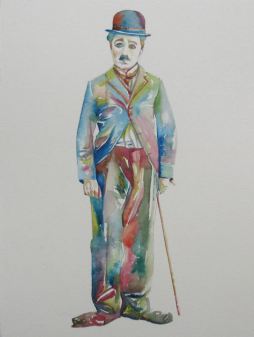
A beautiful poem by Charlie Chaplin. Thank you Soul Fields and Ambition in the City for posting it to be found and read!

As I began to love myself I found that anguish and                                                           emotional sufferingtumblr_ltkntmre6i1qkdy8to1_500 are only warning signs that I was living against my own truth.
Today, I know, this is “AUTHENTICITY”.

As I began to love myself I understood how much it can offend somebody.
As I try to force my desires on this person, even though I knew the time
was not right and the person was not ready for it, and even though this
person was me. Today I call it “RESPECT”.

As I began to love myself I stopped craving for a different life,
and I could see that everything that surrounded me was inviting me to grow. Today I call it “MATURITY”.

As I began to love myself I understood that at any circumstance,
I am in the right place at the right time, and everything happens
at the exactly right moment. So I could be calm.
Today I call it “SELF-CONFIDENCE”.

As I began to love myself I quit steeling my own time,
and I stopped designing huge projects for the future.
Today, I only do what brings me joy and happiness, things I love to do
and that make my heart cheer, and I do them in my own way and in
my own rhythm. Today I call it “SIMPLICITY”.

As I began to love myself I freed myself of anything that is no good for
my health – food, people, things, situations, and everything that drew
me down and away from myself. At first I called this attitude
a healthy egoism. Today I know it is “LOVE OF ONESELF”.

As I began to love myself I quit trying to always be right, and ever since
I was wrong less of the time. Today I discovered that is “MODESTY”.

As I began to love myself I refused to go on living in the past and worry
about the future. Now, I only live for the moment, where EVERYTHING
is happening. Today I live each day, day by day, and I call it “FULFILLMENT”.

As I began to love myself I recognized that my mind can disturb me
and it can make me sick. But As I connected it to my heart, my
mind became a valuable ally. Today I call this
connection “WISDOM OF THE HEART”.

We no longer need to fear arguments, confrontations or any kind of problems with ourselves or others. Even stars collide, and out of their crashing new worlds are born. Today I know THAT IS “LIFE”!


Posted in Poetry | Tagged , , , , , , , , , , , , , , , , | 21 Comments

Animal Spirits: The Raven/Crow and The Hummingbird

images

A black and a white crow

Late this morning I came across Symbol Reader’s post: I Love You, My Secret Raven (a great read for those of you who like Kafka and psychological astrology!). About ten minutes later I heard the kaw-ing of crows outside my window. Ravens and crows were a very rare sight in the city when I was growing up, but nowadays it’s not unusual to see a few here and there. However, I was very surprised and intrigued to see a murder of crows congregating in view of my window: in the trees, on rooftops, and even several walking on the sidewalk. As I watched, more and more gathered. Knowing that they are messengers of sacred law, I asked them if there was anything I needed to know or do. The response I “heard” was that the change I have been perceiving is coming and to accept and work with what comes. At that moment a hummingbird appeared, circling about, in the middle of the this whole scene, and then a dove flew by. Then in a blink of an eye, all the birds flew away.

Crows and ravens are part of the Corvidae family, which also includes blue jays, stellar jays, and magpies. Crows and ravens are often feared, partly because they are usually black (but occasionally white – the Greek god Apollo is said to have turned the crow from white to black after his white crow failed to peck out the eyes of his lover’s lover) and thus associated with death, and partly because they are very smart scavengers who will congregate around recently deceased animals and humans (such as in a battle field). They are associated with death, war, and bad omens across many cultures from Australian Aboriginal myths to the Celtic goddess the Morrigan.

Though the Morrigan, who was also called the Phantom Queen, was the goddess of war and death, she was also a great prophetess. The future is something that is hard for us to prophesy for it is the unknown. Like the raven and the crow the unknown is pitch black, dark, and frightening for many of us. The raven/crow’s symbolic representation of death/change and its portending of bad prophesies is a matter of perception. If viewed through fear, change will seem unpleasant. If viewed with openness, doors of opportunities for growth, understanding, and wisdom will open. Crows and ravens can be our guides as we step into the unknown.

The Raven and Crow symbolize:

  • Sacred Wisdom and Sacred Law
  • Moving freely in the void
  • Working without fear in darkness
  • Working in shadow/with our shadow selves
  • Moving through space and time; and shapeshifting
  • Carrying souls from darkness into light
  • Honoring the deceased and ancestors
  • Memory and Intelligence
  • Ethical behavior

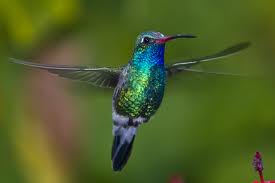
Hummingbirds are one of the smallest birds                                                                      known to man. Though most hummingbirdsimages-1 live in tropical environments, they inhabit the full length of the Americas from Alaska to the southern tip of Chile. These are high energy and long-distance migrating birds with amazing flight maneuverabilities. They also have beautiful and sometimes shimmering colorings. Hummingbirds are a joy to see and to watch, lighting up any dull moment. The local Native Americans, the Ohlone, believe it was the hummingbird that brought fire (light) to man.

The hummingbird symbolizes:

  • Endurance and Persistance
  • Energy and Vitality
  • Healing and the ability to heal using light
  • Ability to fit into small places to heal; Agility
  • Joy and Happiness
  • Peace and Love

I’ve been sensing big change is coming, but I am confident that it will open up doorways that will lead to even greater peace, love, light, and joy.

Posted in Animal Spirits | Tagged , , , , , , , , , , , , , , , , , , , , , , , , , , , , | 37 Comments

The Doshas of Ayurveda and Their Astrological Influences

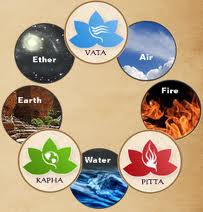
In Ayurvedic Medicine there are three metabolic body                                                       types associated with the fiveimages elements of ether (space), air, fire, water, and earth. Each of us is born with what is our natural Dosha constitution, in which our physical selves will have one or two dominant Doshas. During times of illness, disease, and mental or emotional stress our natural constitution becomes imbalanced. The word Dosha दोष means defect or flaw and refers to the five flaws of human nature: lust, anger, greed, fear, and delusion, for these flaws can easily throw our natural healthy states into disharmony. This concept is very similar to the three roots of illness in Tibetan Buddhist Medicine.

The three Doshas are Vata, Pitta, and Kapha. Vata वात means wind and has the elements of ether and air. Pitta पित्त means bile and has the elements of fire and water. Kapha कफ means phlegm and has the elements of water and earth. Each Dosha has its natural qualities, and as with the Gunas of Ayurveda there are foods that are associated with each Dosha:

Qualities:

  • Vata: cold, dry, light, moving, flighty, spiritual, thin
  • Pitta: hot, oily, light, fiery, vibrant, successful, aggressive
  • Kapha: cool, oily, heavy, stable, slow, methodical, greedy

Foods/Tastes:

  • Vata: bitter, astringent, pungent/spicy, raw
  • Pitta: sour, pungent/spicy, salty, fetid, warm
  • Kapha: sweet, salty, sour, creamy, heavily cooked

Ayurvedic Medicine follows the principle of “like increases like,” and depending on each of our constitutions, we want to nurture our natural healthy states by taking in more foods that are unlike our constitutions. For example, if you are mostly Vata and are healthy (i.e. have no illness or imbalances) then eating more moist, sweet, heavy, warm, and salty foods than others will help to keep your body and mind healthy, grounded, and in balance.

And what if we are not healthy in body and/or mind? Though there are many lists out the that we can look at to try to determine our natural constitutions, it is best to seek out an Ayurvedic Practitioner for a proper evaluation. Besides their expertise, we may have imbalances that we are not fully aware of, or think that they are just how we are mistakenly thinking that that is part of our constitution. For example, if you are mostly Kapha, but think your tendency for rashes or to get angry easily is your natural state, you may think you are mostly Pitta. However, these may actually be signs of imbalance, and if you try to self-treat through a diet for Pitta types, you can make things worse.

Though we all have some of all three Dosha qualities, it is our dominant one or two Doshas that determines our individual type. The types are: Vata, Pitta, Kapha, Vata-Pitta, Vata-Kapha, Pitta-Vata, Pitta-Kapha, Kapha-Vata, and Kapha-Pitta. In additon, there are also some of us whose natural constitution is an even combination of all three Doshas. This is called Tridoshic or Tridhatu त्रिधातु, meaning threefold.

Just as there are Gunas in Vedic Astrology, the Doshas have an astrological influence too, with the zodiac signs (Rashis) and planets (Grahas) having their own dominant Dosha:

  • Vata Signs: Taurus/Vrishibha, Virgo/Kanya, and Capricorn/Makara
  • Vata Planets: Saturn/Shani, and Rahu
  • Pitta Signs: Aries/Mesha, Leo/Simha, and Sagittarius/Dhanus
  • Pitta Planets: Sun/Surya, Mars/Mangala, and Ketu
  • Kapha Signs: Cancer/Karkata, Scorpio/Vrishchika, and Pisces/Mina
  • Kapha Planets: Moon/Soma, Venus/ Shukra, and Jupiter/Guru
  • Tridhatu Signs: Gemini/Mithuna, Libra/Tula, and Aquarius/Kumbha
  • Tridhatu Planets: Mercury/Buddha

In our birth charts the Doshas of our Ascendant, its ruling planet, and the ruler of the sixth house (health, disease, and hygeine) can give us a heads-up to potential imbalances in our bodies. (To find your Vedic astrological Ascendant sign and sixth house ruler, a birth chart needs to be drawn up.)

Since I know some of you are going to ask… Both my Ascendant and sixth house are ruled by Mars indicating I have a tendency for heat-related afflictions, and for a long time I thought I was a Pitta type until I went to see an Ayurvedic Practitioner. He asked me many questions, looked at my tongue and eyes, and then took my many pulses for about 15 minutes. It turns out I am Vata-Pitta, and this revelation allowed me to properly address the heat conditions I was experiencing.

Posted in Astrology & Astronomy, Health & Healing | Tagged , , , , , , , , , , , , , , , , , , , | 30 Comments

Animal Spirits: The Peacock

Now that I’ve begun the Animal Spirits category,peacock6 I’ve been asked about the symbolism of the peacock. It’s been hiding on my About the Peacock’s Eyes page, so I thought I would repost it here:

Meaning and Symbolism of the Peacock

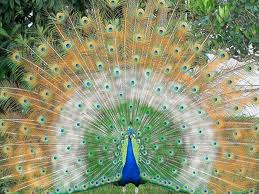
I chose the title, Through the Peacock’s Eyes, for a couple of reasons: the symbolism of the peacock, and its connection to the Hindu goddess Saraswati. The symbolism of the peacock is similar across many cultures, from Christianity where it represents patience, love, eternal life, and immortality, to Buddhism where it represents wisdom, kindness, and compassion. The Bodhisattvas, such as Quan Yin and Avalokiteshvara, are often associated with the peacock because as the peacock can eat poison and not be affected by it, the Bodhisattvas can take in the poisonous emotions of others and not be affected by them.

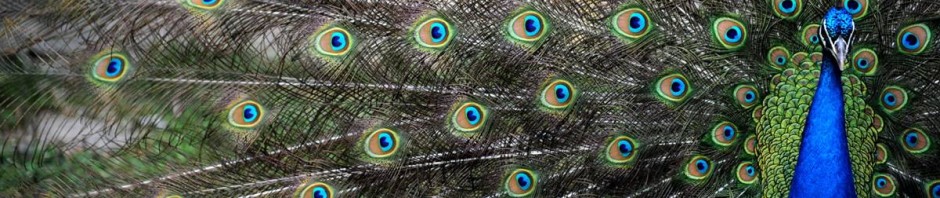
The peacock’s habit of replacing its feathers yearly and its connection to the phoenix also make it a symbol of renewal, rebirth, and reincarnation. In ancient Greek mythology, when the “all-seeing” 100-eyed giant Argus died, the goddess Hera preserved his eyes on the peacock to honor him. Thus the peacock’s eyes themselves represent seeing, insight, and wisdom. The eyes on the peacock’s feathers are also thought to represent the stars in the heavens.

The Goddess Saraswati

In Hindu mythology, the vehicle for the goddess Saraswati is often the peacock. Saraswati is the goddess of wisdom, knowledge and learning, creativity, music, language, and writing. As her vehicle, the peacock helps her navigate through the world with compassion, wisdom, and understanding.

Posted in Animal Spirits | Tagged , , , , , , , , , , , , , , , , , , , | 18 Comments

Animal Spirits: The Dove

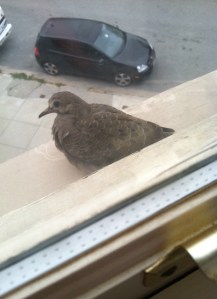
This morning after returning home from my early                                                         morning walk with my photography photoassistants, I pulled the curtains aside and found a fledgling dove sitting on the window sill. Not unusual for this city known for its wind, it was a very blustery morning (and night!), and this wise baby bird, knowing it did not yet have the wing strength to battle this strong wind, was sitting out the storm. Or was she bringing me a message?

Birds in general are considered messengers from God, the Divine, and the spirit realm. Doves, specifically the ones called pigeons, can be domesticated and trained to carry messages for man, such as the Carrier Pigeon. As messengers of Spirit, doves and the wings of the doves as angel wings, reinforce their messenger attribute. The word Angel itself (Ancient Greek: ἄγγελος) means messenger.

As a communicator between the two worlds of the physical and spirit realms, doves symbolize higher love, purification of the soul, ascension, grace, divinity, and the soul leaving the body upon death. Mourning Doves are so called because, according to Celtic tradition, their call signaled the passing of a soul in peace. And according to Slavic tradition, doves carried the souls of the dead to heaven.

Doves also represent motherhood. Along with the dove’s ability to be domesticated, doves are depicted with Mother Goddesses, such as the Assyrian goddess Ishtar and the Christian Virgin Mary.

But most commonly doves represent wisdom and peace, both inner peace and world peace. The dove is often depicted with the Greek goddess Sophia (σοφία), which means wisdom. She is Divine Wisdom, the wisdom of the Holy Spirit. As praised by the Christian mystic, herbalist, and medicine woman Hildegard von Bingen:

SophiaDoveChaliceHranaJantoSophia!

You of the whirling wings,
circling, encompassing energy of God:
you quicken the world in your clasp.

One wing soars in heaven,
one wing sweeps the earth,
and the third flies all around us.

Praise to Sophia!
Let all the earth praise her!


May the Divine Grace, Love, Spiritual Wisdom, and Inner Peace of the Dove inspire us all to spread Grace, Love, Wisdom, and Peace to all others across this world and into the next. Peace be with you!

Check out Bloggers for Peace!

Visit other peace-loving bloggers at Everyday Gurus!

Posted in Animal Spirits | Tagged , , , , , , , , , , , , , , , , , , , , , , , , , , , , , | 20 Comments

Animal Spirits: The Wolf

images

True Family Values

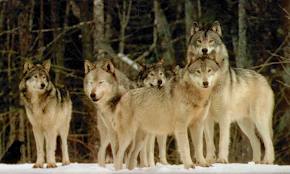
The wolf is a creature greatly feared. They are depicted in fairy tales, mythologies, stories, and movies as ferocious and murderous. As the Werewolf, they are one of the monsters that go bump in the (full moon) night and haunt dreams. Wolves are hunted world-wide out of humans’ fear of protecting their farm animals and families. However all of these are misconceptions about the wolf.

The wolf is an animal whose life is all about the family, the wolf pack. They only hunt to feed the family, usually in groups. They work together communicating with the group, and with intelligence, stealth, and skill provide for their pack, especially the young. They are social and friendly. Wolves are also very adaptable animals, able to move the pack when necessary (except when the pups are too young) and able to adjust to harsh climates. Overall the wolf represents:

  • Social and family values
  • Skill in protection of self and family
  • Loyalty and steadfastness
  • Compassion and friendliness
  • Instinct linked with intelligence
  • Ability to pass unseen
  • Outwitting enemies
  • Able to take advantage of change
  • Facing death with dignity and courage

Scary wolves abound in myths. Besides the Werewolf, there’s the bad wolf in the story of Little Red Riding Hood and countless other children’s stories, and in Norse mythology there is the monstrous wolf Fenrir, who was fortold to kill the god Odin, and Fenrir’s sons Sköll and Hati. Sköll chases the Sun through the sky trying to eat her (yes, Norse mythology is the only place that I’ve come across where the Sun is feminine and the Moon is masculine), and Hati chases the Moon. But there are also myths and stories that tell of the true nature of these loving and caring animals, such as the mother wolf who adopted the babies Romulus and Remus, who eventually founded the ancient city of Rome and the Roman Empire. The Mongols and Ainu people of Japan consider wolves to be their ancestors, and the Dena’ina people of Alaska treat wolves as brothers believing they were once human.

The intelligence and wisdom of the wolves, however, exists whether the stories about them are bad or good, and this may be why they also symbolize teachings of Spirit and provide guidance during meditations and dreams.

My “ferocious” Wolfie-pups:


Posted in Animal Spirits | Tagged , , , , , , , , , , , , , , , , , , , , , , | 27 Comments

Squash Garden & Squash Blossom Samosas (6 Photos)

Posted in Health & Healing | Leave a comment

The Gunas of Ayurveda for Health & Healing

Understanding the three Gunas of Prakriti is not only                                                     helpful when studying our birthtantra-chakras charts and astrology, but it can also be beneficial when we turn our attention to our health, healing, and the foods we eat. Vedic Astrology has a close connection with Ayurveda, the traditional medicine of India. For Ayurvedic practitioners studying an individual’s birth chart and astrology is a diagnostic tool. It helps them gain insight into the patient’s karma as well as tendencies for disease and illness. Ayurveda, which means the science (knowledge) of life, and Vedic Astrology together are sciences and systems designed to bring harmony and balance to our bodies, minds, and souls so that we can then harmonize with the great Consciousness of the Universe.

Determining whether our lifestyles, personality traits, and diet are sattvic, rajasic, or tamasic provides a good amount of information about our health and what healing remedies may be needed. Ayurveda places a strong emphasis on good hygiene, proper exercise, and healthy eating habits. Food as medicine, which can be animal-based or plant-based, and herbal medicines are an integral part of Ayurveda.

Ideally we want to be leaning towards a sattvic state of health. When we are sattvic we partake in spiritual and intellectual/educational activities. Our minds are clear and at peace and we engage in selflessness and compassion on a regular basis. We are more in tune with our intuition and feel connection to the Divine or Universe. Sattvic foods are fresh, organic, not overly cooked, and not too oily, spicy, or salty. The diet is lacto-vegetarian.

While it would be nice if we felt sattvic in all areas of our lives at all times, we all have times when we feel and behave rajasic and tamasic. Some of us may even inherently be more rajasic or tamasic, and in these cases more attention towards health and healing may be needed. Rajasic individuals are very active, aggressive, powerful, and worldly. They get energy from stimulation, including stimulating foods: high quality, freshly made, rich tasting, higher in protein (meats), and more oils and spices.

Tamasic individuals often have dark emotional states and sometimes unusual personality traits. They are self-serving, highly craving and desirous but stagnant or lazy, and sedentary. They tend towards overly sugary, spicy, and heavily cooked foods, a lot of meats, processed and packaged foods, and intoxicants.

Understanding the Gunas in our birth charts and how our lives and health may lean more towards one or another can give us insights into healing and into bettering and maintaining our health.

Posted in Health & Healing | Tagged , , , , , , , , , , , , | 12 Comments