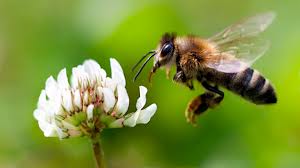
Animal Spirits: The Bee

images

Busy Bee

With the warmer weather and longer days, many of us engage in more outdoor and group activities and spend more time working on projects and with family. Some of us become as busy as a bee. While it is normal to see more bees throughout the spring and summer, what does it mean when bees and bee signs keep appearing to us? What messages are these little animal spirits bringing to us?

The term “busy bee” is no accident. Bees symbolize industriousness, concentration, activity, busy-ness, group communication, and family and social networks. They tell us very busy times are ensuing. This increase in activity should be beneficial though. Bees are very productive creatures making all that golden honey, which represents wealth, prosperity, and fruition of hard work.

Seeing bees may indicate the need to organize the home or the structure of your life. They also live for the community and for the good of the group (hive), and thus may hint at the need to engage in more compassionate and humanitarian activities.

On the deeper level bees symbolize reincarnation, and are said to communicate with the dead and help earth bound spirits move on to their proper place. That bee that won’t go away may actually be helping a soul or ghost let go of this material realm.

Lastly, bees are connected to female warrior energy and the Greek goddess Diana. Most of the hive is female. The males (drones) are few and only serve the purpose of mating with the Queen Bee so that she can produce more females (workers) to grow and sustain the hive. The bee hive is a world of females, who do all the “hunting” and gathering, home maintenance, and nurturing of the young. Diana is the goddess of animals, the forest, hunting, the Moon (mother and nurturing), and childbearing. The bees’ connection to her reinforces this female warrior community.

Now that Summer is here may we all be as busy and as prosperous as the bees! Oh, and do not be afraid of them. They only sting if they are protecting the hive (so you have to be very close or disturbing it) or if you step or sit on one.
Posted in Animal Spirits | Tagged , , , , , , , , , , , , , , , | 17 Comments

Purushaarthas: The Four Motivations of Life

tumblr_m3h7nwD4Rr1r47bczo1_500

Moksha मोक्ष

Let’s now discuss the four motivations of life, the Purushaarthas पुरुषार्थ. They are Dharma धर्म, Artha आर्थ, Kama कामा, and Moksha मोक्ष. The Purushaarthas are also called the four aims, pillars, purposes, and urges. The first three, Dharma, Artha, and Kama are human pursuits, which eventually lead us to our final purpose of liberation, Moksha. In Jyotisha (Vedic Astrology), these four motivations help to determine and indicate our purpose(s) in this lifetime. Each Nakshatra is influenced by a specific Purushaartha. They are also reflected through the houses in our birth charts:

Dharma is duty and righteous action (towards ourselves and others). Our personal Dharma is our main purpose in this lifetime. Dharma is reflected by the first (individual self), fifth (creativity), and ninth (spirituality) houses.

Artha is respectable and meaningful activities, goal-orientated behavior, and practical matters, such as work and finances.  Artha is reflected by the second (finances), sixth (work, service, health), and tenth (career) houses.

Kama is our desires and passion driven activities. These desires motivate us towards progress in this physical life. Kama is reflected by the third (communication), seventh (relationship), and eleventh (profits, social activities) houses.

Moksha is the urge to detach from the three urges above that bind us to the physical realm, and from the cycle of death and rebirth. It is liberation, nirvana, enlightenment. Moksha is reflected by the fourth (emotions, home, family), eighth (death, transformation), and twelfth (loss, moksha) houses.

When looking at our natal charts it is most important to look at the Purushaartha influences on the Ascendant, Ascendant lord, the Sun, the Moon, and the Nakshatras to get an understanding of the deeper impulses we sense in different aspects of our lives and of our souls’ purpose(s) in this incarnation. They can also show us the karmic challenges we must face on our journeys towards Moksha.

All the Nakshatras, Vedic (Sidereal) Zodiac signs, and more can be found in my book, Shedding Light on JyotishaVedic Astrology For Beginners.

Posted in Astrology & Astronomy | Tagged , , , , , , , , , , , , , , , , , | 17 Comments

The Gunas: The Three Constituents of Prakriti

trimurtipicture

Brahma, Vishnu, & Shiva

Before going further into the Nakshatras and Jyotisha (Vedic Astrology), we need to become familiar with both the three Gunas and the four motivations of life. Let’s begin with the Gunas, which are the intrinsic qualities or tendencies of Prakriti, the universal energy of primary matter or Nature.

The three Gunas are Sattva, Rajas, and Tamas, and they are often associated with creation (Brahma), preservation (Vishnu), and destruction (Shiva) respectively. Brahma, Vishnu, and Shiva make up the Hindu Trinity or Trimurti, and with their association with the three Gunas we can see how they represent the three stages that matter, or Nature, goes through in her continuous cycle of life.

Sattva सत्त्व translates as essence. When someone or something is sattvic it has the qualities of purity, equilibrium, harmony, and goodness. Rajas रजस् translates as air or vapor. Being rajasic has the qualities of activity, movement, and passion. Tamas तमस् translates as darkness, ignorance, and illusion. It is also a term for the obstruction of the Sun and Moon during eclipses. Tamasic qualities indicate sluggishness, inertia, and lethargy.

In the Bhagavad Gita, Sri Krishna explains the Gunas to Arjuna in great detail:

It is the three gunas born of prakriti – sattva, rajas, and tamas – that bind the immortal Self to the body. Sattva – pure, luminous, and free from sorrow – binds us with attachment to happiness and wisdom. Rajas is passion, arising from selfish desire and attachment. These bind the Self with compulsive action. Tamas, born of ignorance, deludes all creatures through heedlessness, indolence, and sleep. Sattva binds us to happiness; rajas binds us to action. Tamas, distorting our understanding, binds us to delusion…

When sattva predominates, the light of wisdom shines through every gate in the body. When rajas predominates, a person runs about pursuing selfish and greedy ends, driven by restlessness and desire. When tamas is dominant a person lives in darkness – slothful, confused, and easily infatuated… 

Sattvic knowledge sees the one indestructible Being in all beings, the unity underlying the multiplicity of creation. Rajasic knowledge sees all things and creatures as separate and distinct. Tamasic knowledge, lacking any sense of perspective, sees one small part and mistakes it for the whole.

We all have sattvic, rajasic, and tamasic indications and aspects in our natal charts, and it is the balance, interactions, and influences of those qualities in different areas of our lives and personalities that show us where in our lives we need to focus more attention or where we have the most potential for learning and growth. Just because one’s Moon was in a tamasic Nakshatra at the time of birth, does not necessarily mean that he is doomed to a life of laziness and gloom. There are many, many, many other aspects and influences in a birth chart that could neutralize, remedy, or assist this. This is why it is important to look at someone’s chart as a whole, as individual pieces only give a small snippet of information.

The whole is greater than the sum of its parts. Aristotle

All the Nakshatras, Vedic (Sidereal) Zodiac signs, and more can be found in my book, Shedding Light on JyotishaVedic Astrology For Beginners.

Posted in Astrology & Astronomy | Tagged , , , , , , , , , , , , , , , , , , , , , , , , , , | 29 Comments

Nakshatras: The Lunar Zodiac

images

Solar and Lunar Zodiacs

When we think about astrology, most of us will immediately think about the twelve signs of the zodiac: Aries, Taurus, Gemini, Cancer, Leo, Virgo, Libra, Scorpio, Sagittarius, Capricorn, Aquarius, and Pisces. When we say someone is an Aries, for example, that means they were born when the Sun was in Aries, either the month-long period of time after the Vernal Equinox (Western Astrology) or the period when the Sun is passing through the constellation of Aries (Vedic Astrology). However, in Vedic Astrology one is often labelled by their Ascendant sign, and in this case someone would be called an Aries when at the moment of birth the constellation Aries was rising on the eastern horizon. The Ascendant, Sun, and Moon placements among the twelve signs of the zodiac are very important in our birth charts, but in Vedic Astrology there is another system of constellations called the Lunar Zodiac or Lunar Mansions.

First, some Astronomy: To understand the Lunar Zodiac, we first have to understand the Moon’s cycles. There are two main cycles of the Moon, or months. From here on Earth we can easily see what is called the Lunar, or Synodic, Month. A Lunar Month is the period from one New Moon to the next New Moon, or one Full Moon to the next Full Moon, and it lasts 29 days, 12 hours, and 44 minutes. It takes the Moon a little more than one revolution around the Earth to complete a Lunar Month.

The other main cycle of the Moon is called the Sidereal Month. The Sidereal Month is based on the position of the Moon in respect to the background of the stars or constellations [Latin: sidus, sideris], and lasts 27 days, 7 hours, and 43 minutes. The Moon begins and ends this month in the same position in the sky, in the same constellation, and at the same degree. For example, if the Moon is at 10 degrees Leo at this moment, in 27 d, 7 h, 43 m it will again be at 10 degrees Leo beginning a new “month.”

Just as Vedic Astrology is based on the Sidereal Zodiac, the Lunar Zodiac (or Nakshatras, which also means star, constellation, asterism…) is based on the Sidereal Month of the Moon. The Moon passes through approximately one Nakshatra per Earth day, and thus there are 27 Nakshatras. I have read that in very ancient times there were once 28, but somewhere down the line the sages must have determined that 27 were better. When we overlap the Solar and Lunar Zodiacs, we can see that there are two and a quarter Nakshatras that cover the period of each of the twelve solar signs.

And the Astrology? Studying the Moon and the Nakshatras is very important in Vedic Astrology. In one’s birth chart, the Nakshatras influence the solar sign they are in and the planets that are in the Nakshatras. The rulers of the Nakshatras as well as the ruling Deities of the Nakshatras also have influences on the planets residing there. Most important when looking at a birth chart is the Nakshatra that the Moon and Ascendant are in. The Moon’s Nakshatra can change its nature and can alter the character of the natal chart. The influences of the Nakshatras are subtle but deep.

There are three additional layers of interpretation. Each Nakshatra is divided up into four Padas (feet), each with its own ruler adding more subtle layers of influence onto one’s personality. The Nakshatras are also categorized according to the four functions or motivations of life: Artha (material action, work), Kama (desires and passions), Dharma (righteous action, duty), and Moksha (liberation). The Nakshatras also have the attributes of the three Gunas: Sattva (purity), Rajas (action), and Tamas (darkness or sluggishness).

Besides greatly influencing one’s birth chart, the Moon’s Nakshatra is used to determine the Dasha periods, which along with the Moon are used to advise about the future, make predictions, and produce horoscopes. The Nakshatras are also used to do Electional Astrology, which is used to pick auspicious dates and plan important events such as weddings.

The layers of interpretation are many! Now that I’ve briefly introduced the Nakshatras, I will soon begin to go through the Lunar Zodiac to discuss each of the 27 Nakshatras in more detail.

All the Nakshatras, Vedic (Sidereal) Zodiac signs, and more can be found in my book, Shedding Light on JyotishaVedic Astrology For Beginners.

Posted in Astrology & Astronomy | Tagged , , , , , , , , , , , , , , , , , , , , , , , , , , , , , , , | 32 Comments

Animal Spirits: The Bear

The bear, a powerful creature we fear coming                                                                     across on a peaceful hike but also a symbolimages4 of cuteness and security, the Teddy Bear. Bears exhibit some contrasting behaviors: blissfully munching on berries or lounging peacefully in the sun while listening to the song of a flowing river versus being frightfully defensive or angrily attacking anyone that comes near its space or young. This ferocity of the bear made them a symbol of bravery and warriors from Native American cultures to the Celts. Even Viking Berserkers were named after the bearskins they wore to enhance their viciousness in battle.

The bear is also a strong symbol of protectiveness and motherhood. This motherhood-ness and its ability to hibernate through the winter connect the bear to the Moon making it also symbolic of dreams, visions, change, and transformation. Except when raising young, the bear is a solitary creature. This natural tendency along with its deeply meditative hibernation make it a creature of introspection, death and rebirth, resurrection, patience, solitude, and inner peace.

Other symbolic meanings of the Bear:

  • Communicator with Spirit
  • Guide for Healers and Healing
  • Astral Travel
  • Confidence and Inner Strength
  • Guide for Mystics and Shamans

As many of you have noticed, I have a thing for bears. Yes, my two Alaskan Malamutes are named Bear (Kuruk and Nalle), but it really all began many years ago when I was having recurrent dreams about bears. In these dreams the bears would be wandering around the streets as I was walking home from work. I was also in graduate school at the time, but in the dreams I was always walking home from work. The bears were looking for me, and sometimes they were following me, trying to catch me. I always woke up before they got me, but they were still very frightening dreams.

Why were bears waking around a major city? Why were they looking for me? What were they trying to tell me? These dreams recurred for about a year, until I decided to change course in life, and switch from a possible academic career to a healing profession. It was after this when I came across that bears are guides for healers that I consciously knew what those dreams meant. Luckily, my subconscious picked up on the message and steered me towards a new path.

When animals and spirit guides come to us in dreams, it can be difficult to understand their message. Seeking the assistance of a Shaman, Psychic, or other intuitive or spiritual healer can help, but you can also do a focused meditation on the animal, try to return to the dream, or just go with the initial impression or feeling you had when you first woke up from the dream. You can also ask for confirmation signs during waking hours too, for the messages from the spirit realm are all around us.

Posted in Animal Spirits, Psyche & The Dreamworld | Tagged , , , , , , , , , , , , , , , , , , , , , | 27 Comments

Peace at Home

Avalokiteshvara

Avalokiteshvara, Bodhisattva of Compassion

This month’s Bloggers for Peace Challenge is Peace at Home. Having a peaceful home life makes us more likely to extend that peace outside the home, much like having inner peace is a key to having world peace. But how do we create a peaceful home, especially when there can be other strong egos to co-habitate with? We can try to teach, nag, or complain to family members about being more compassionate and selfless, but as many of us have experienced, this usually doesn’t lead to any changes. We can’t control others, not even our parents, partners, siblings, or children, but we can control how we behave, act, and respond to the situations and dynamics in the home.

Peace at home begins with each of us. By setting aside our egos’ desires to argue with our siblings, talk back to our parents, or control our spouses or children, and instead acting with understanding and compassion for their struggles and challenges in their lives, we set the foundation for peaceful and loving relationships in the home. When we accept others as they are, we remove the selfish clutter hiding our hearts. And by setting an example of love and peace, love and peace will grow in other’s hearts too.

The family unit and home life is a community, just as each of us is also part of larger communities: work, school, neighborhood, country, and the world. We can’t individually bring peace to the world, but we can work towards peace within ourselves and in our personal communities. From there may peace spread!

Perceiving now the faults possessed by the ego, and the ocean of good qualities that are in others, I shall lay aside all selfishness, and gain the habit of accepting other beings. Just as hands and other limbs are thought of as members of a body, can we likewise not consider others as the limbs and members of a living whole?

– Shantideva

While you are proclaiming peace with your lips, be careful to have it even more fully in your heart.

For it is in giving that we receive.

Lord, grant me the strength to accept the things I cannot change, the courage to change the things I can, and the wisdom to know the difference.

Saint Francis of Assisi

Love begins at home, and it is not how much we do… but how much love we put in that action.

– Mother Theresa

Check out all the other Bloggers For Peace!

Posted in Religions & Philosophies | Tagged , , , , , , , , , , , , , , , , | 14 Comments

Animal Spirits: The Dragonfly

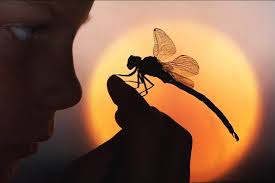
As I headed out this morning for my early                                                                       morning walk with my pups, I came across aimages very large Dragonfly just sitting on the street. You can see pictures of it here. I didn’t sense that it was dead, though it did not move, not even when the pups got close. I felt that it was sleeping and waiting. So I asked to take his picture and then continued on our walk. I said to myself that if it was waiting as sign for me, it would be gone when we returned, which it was.

Animal spirits, animal guides, totem animals, and animal soul-mates are all around us to guide us, support us, and bring messages to us. Though sometimes they can manifest though visions, energy sensations, seeing statues or signs, reading repeatedly about them, and in dreams, animal spirits often come to us as animals, big and small. They are part of Nature, the Universe, and Consciousness. They are part of us all, and they are here to help us along on our journeys. Though some of us can intuitively pick up on their messages, learning about and understanding what our animal guides and messengers symbolize can help us tremendously.

The Dragonfly is a creature that lives around water, and thus represents intuition, dreams and understanding dreams, the mind – both superficial thoughts and deep thoughts -, illusions and breaking down illusions, and change. Focusing on the Dragonfly during meditation can help to clear the mind and pull aside the veils of illusion. It is also a symbol of:

  • Swiftness
  • Power of Fight
  • Harmony and Balance
  • Purity
  • Peace
  • Prosperity
  • Good Luck

As its name tells, the Dragonfly is also connected to the Dragon, and hence the Serpent, which can indicate an astrological message concerning yourself, another, or an astrological event connected to the Dragon or Snake in Chinese Astrology, Scorpio in Western Astrology, or the shadow planets Rahu and Ketu in Jyotisha or Vedic Astrology.

With all these possible symbols and meanings, how do we know what the message is? Listen to what resonates in your heart. You can also ask for clarification through meditations, visualizations, and dreams. Connecting with animal spirits can bring us all closer and more integrated with Nature and the Divine.

So, what was the Dragonfly’s message for me? To get started on this new blog category on animal spirits that I’ve been dreaming of, thinking about, and have had hidden in the back of my mind. Maybe there’s some good luck coming too! 😉

Posted in Animal Spirits | Tagged , , , , , , , , , , , , , , , , , , , | 34 Comments

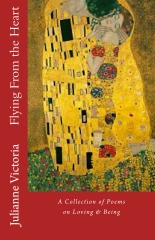
Poetry Book: Flying From the Heart

I’d like to announce my latest publication: Flying From                                                     the Heart, A Collection ofTHUMBNAIL_IMAGE Poems on Loving and Being.

This book is a collection of poetry from the past several years about spiritual love, life, energy, and consciousness. Included is the poem Butterfly from my book Butterfly Journal: Monthly Contemplations for Spiritual MetamorphosisFlying From the Heart also features two powerful poetic duets, Shamanic Energy and The Star Within, written with talented writer David Ellis.

For Print Version Order Here

For Kindle Version Order Here

This and my other books are also available at Amazon and Barnes & Noble.

For more information about David Ellis:

David Ellis
Lyricist / Poet / Short Story Writer
Follow me on Twitter:- @TooFullToWrite
For Comedy, Flash Fiction, Short Stories and Poetry, visit his blog at:-
Posted in Book Reviews Etc., Poetry | Tagged , , , , , , , , , , , , , | 14 Comments

The Eighth Limb of Yoga: Samadhi समाध

The final limb of the Eight Limbs of Yoga is                                                                   Samadhi, often translated as absorption,315704_474964959219589_1861847229_n intense contemplation, union with God, a superconscious state, or a complete meditative state of oneness with the All or the Divine. In essence it is all of these, as they are all ways we use words to describe that for which there are no words to properly describe.

As stated in the post Quantum Yoga & Samadhi: [Samadhi] is often thought of as a state of a thought-free mind connected with the body, but this would make it a goal of the separate individual. On the contrary, the oneness of Samadhi is a oneness with All: the divine, the universe, the mundane, and all sentient beings; and the complete meditative state is not a form of escapism, but a cessation of letting the chatter and worry of the ego-mind cloud our awareness. A meditative state is a state of complete awareness of the oneness of All.

In The Yoga Sutras Patanjali talks about several types of Samadhi, categorized under distinguished (samprajnata) and undistinguished (asamprajnata). Samadhi is practiced on all levels: material, mental, subtle…leading to the understanding of “I-ness” and Prakriti, Nature, the basic energy from which mind and matter form. The purpose of these Samadhi practices is to understand Prakriti and the ego so that with this awareness, we can set them aside and see our True Self. When we are free of the mental and material/physical, we can then become absorbed into the Divine.

Bhavapratyayo Videha Prakritilayaanaam – Sutra I-19

Those who merely leave their physical bodies and attain the state of celestial deities, or those who get merged in Nature, have rebirth.

Vitarka Vicaaraanandaasmitaanugamaat Samprajnaatah – Sutra I-17

Samprajnata samadhi is accompanied by reasoning, reflecting, rejoicing and pure I-am-ness.

Shraddhaa Viirya Smriti Samaadhi Prajnaapuurvaka Itareshaam – Sutra I-20

To the others, this asamprajnata samadhi could come through faith, strength, memory, contemplation or by discernment.

Iishvarapranidhanad Va – Sutra I-23

Or by devotion with total dedication to God.

Samaadhi Siddhar Iishvarapranidhaanaat  – Sutra II-45

By total surrender to God, samadhi is attained.

When we purely devote ourselves to practicing Samadhi, we will see all forms melt into the radiant luminous light of God, the Divine, All, and the Universe, and we will experience the joy and inner peace of Samadhi. In the Bhagavad Gita, when Lord Krishna bestowed spiritual vision upon Arjuna,

Arjuna declared: You are the supreme, changeless Reality, the one thing to be known. You are the refuge of all creation, the immortal spirit, the eternal guardian of eternal dharma. You are without beginning, middle, or end; you touch everything with your infinite power. The sun and moon are your eyes, and your mouth is fire; your radiance warms the cosmos…You are behind me and in front of me; I bow to you on every side. Your power is immeasurable. You pervade everything; you are everything.

Krishna: But through unfailing devotion, Arjuna, you can know me, see me, and attain union with me. Whoever makes me the supreme goal of all his work and acts without selfish attachment, who devotes himself to me completely and is free from ill will for any creature, enters into me.  

Related Posts:

Bhakti Yoga: The Path of Love

Jnana Yoga: The Path of Knowledge

Twameva Sarvam Mantra – You are everything, the All in All sung by Gina Sala

Posted in Yoga | Tagged , , , , , , , , , , , , , , , , , , , , , , , , , | 6 Comments

The Sound of Silence

silenceMidnightBlue by AtomicZen

how sweet you sound

harmonious

melodious

never skipping a beat

in tune with everything

in tune with nothing

sweet silence


If you enjoyed this poem, you can read many more in my book: Flying From the Heart, A Collection of Poems on Loving and Being. Click Here to learn more or purchase the eBook or hardcopy.

Posted in Poetry | Tagged , , , , , , , , , , , | 27 Comments